How AI Is Changing Video Games: Benefits, Risks, and the Future
AI is reshaping video games through smarter characters, adaptive gameplay, and new development tools. Explore its benefits, limitations, and impact on players.
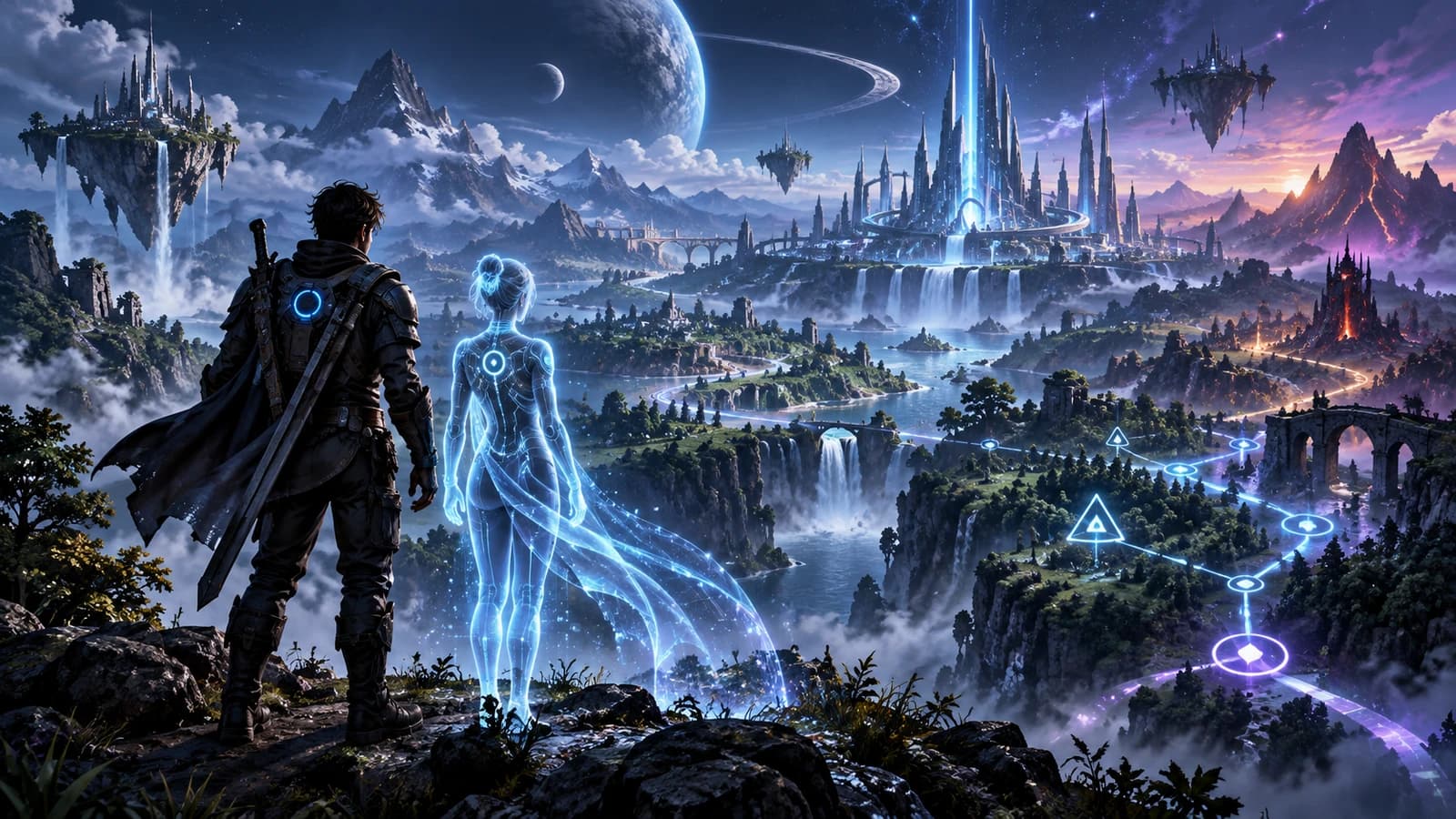
Artificial intelligence has shaped video games for decades. Whenever an enemy searches for cover, a companion follows the player, or an opponent chooses its next move, a decision system helps create the experience.
Today, AI in video games extends beyond character behavior. Machine learning supports graphics technologies, while generative AI is opening new possibilities for dialogue, creative experimentation, and development workflows.
These advances raise an important question: when does AI actually make a game better?
The answer depends on how it affects the player. More dialogue does not automatically mean better storytelling, and an unpredictable enemy is not necessarily a fair opponent. The strongest uses of AI support clear design goals: believable worlds, satisfying challenges, and more room for human creativity.
What Is AI in Video Games?
AI in video games refers to systems that control behavior, make decisions, or support the creation and presentation of a game.
However, the term covers several different technologies.
| Type | What it does | Example application |
|---|---|---|
| Traditional game AI | Follows designed rules and decision structures | An enemy patrols, investigates a sound, and searches for the player |
| Machine learning | Uses patterns learned from training data | An image reconstruction system improves rendered frames |
| Generative AI | Produces new outputs from a model and its inputs | An experimental character generates a conversational response |
This distinction matters. A convincing game character does not need a large language model, and procedural generation does not automatically involve machine learning.
Developers choose these approaches based on the experience they want to create, the hardware available, and the amount of control they need.
1. More Responsive NPCs
Non-player characters, or NPCs, help determine whether a game world feels believable.
Traditional game AI can produce convincing behavior through carefully designed rules. A guard might investigate a noise, alert nearby allies, and return to patrol after finding nothing. The intelligence comes from how these actions fit the situation.
Generative AI introduces another possibility: characters that respond to player language beyond a fixed menu of dialogue choices.
Ubisoft’s NEO NPC project explores this approach through a generative AI prototype. Its developers describe character personalities and narrative boundaries as essential parts of the experience. It is a research example, rather than evidence that unrestricted AI conversations are standard across commercial games. Source: Ubisoft
The potential is appealing. Players could ask follow-up questions, request explanations, or interact with companions more naturally.
The difficulty is consistency. A character must avoid inventing quest information, revealing facts it should not know, or promising actions the game cannot support. Believable conversation requires a reliable connection between dialogue and the actual game state.
2. Adaptive Gameplay and Difficulty
One useful application of AI is helping a game respond to different styles of play.
A system could track signals such as repeated failures, encounter completion times, or resource shortages. Designers could then use those signals to adjust hints, enemy pressure, or the timing of encounters.
Imagine a player who repeatedly struggles with a stealth section. Instead of simply reducing enemy health, the game could offer a clearer environmental clue or an optional reminder about a relevant ability.
Good adaptation preserves the player’s sense of achievement. If assistance becomes too obvious or inconsistent, it can make success feel less meaningful.
For that reason, adaptive systems benefit from clear limits and player choice. Some people want a fixed challenge. Others prefer help that responds to their needs. AI should support both preferences where the design allows it.
3. Faster Creative Exploration for Developers
AI tools can help developers explore ideas before committing to full production.
Potential uses include drafting placeholder dialogue, suggesting code, producing early visual concepts, and summarizing testing feedback. These outputs still need review, but they can give a team something concrete to evaluate.
Microsoft’s Muse research offers a more specialized example. Its World and Human Action Model was trained on gameplay from Bleeding Edge and can generate game visuals and controller actions. Microsoft presents this work as an exploration of gameplay ideation and creative support. Source: Microsoft Research
Generating gameplay sequences is different from delivering a finished game. A production release still needs reliable mechanics, coherent progression, accessibility, performance optimization, and extensive testing.
The practical value of AI depends on what happens after generation. A tool saves time only when its output is useful enough to justify the work needed to check, revise, and integrate it.
4. More Variety in Game Worlds
Procedural content generation allows developers to create variations of environments, encounters, and other content through algorithms. It can operate entirely through conventional rules.
Generative AI adds another way to propose content, potentially including dialogue variations, environmental descriptions, or early layout ideas.
However, quantity is a weak measure of quality.
A hundred generated quests can feel repetitive if they all ask the player to travel somewhere, collect an object, and return. A smaller number of carefully designed missions may offer more memorable choices and consequences.
Useful generated content needs constraints. A level must be navigable. A puzzle must be solvable. A reward must fit the progression system. Dialogue must respect the story.
A promising approach is to combine generated possibilities with authored rules and human review. This gives developers room to experiment while maintaining a recognizable creative direction.
5. AI-Assisted Graphics and Performance
Some effects of AI are visible even when a game’s characters and story remain unchanged.
NVIDIA’s DLSS technology includes AI-based image reconstruction and frame generation. These techniques help games produce higher-resolution imagery or additional displayed frames, depending on the supported features and hardware. Source: NVIDIA
For players, this can create more flexibility when balancing visual quality and performance.
There are still trade-offs. Results depend on the game, the hardware, and the selected settings. Reconstructed or generated images can show visual artifacts, particularly in difficult motion scenarios. NVIDIA’s research discusses challenges involving reflections, highlights, and interface motion. Source: NVIDIA Research
Graphics AI and gameplay AI therefore solve different problems. Better image reconstruction can improve presentation, but it does not make an enemy more strategic or a story more engaging.
6. Support for Testing and Accessibility
AI can also support less visible parts of game development.
Automated agents can be designed to repeat actions, explore routes, or test interactions. This can help teams investigate failures that would be tedious to reproduce manually.
However, automated testing cannot fully answer whether a game is enjoyable, understandable, or emotionally effective. Human playtesting remains essential.
Accessibility is another potential area of support. Language and speech systems could help with conversational assistance or adapting explanations to different needs.
These features require careful evaluation. An incorrect instruction or unreliable transcription can create a barrier instead of removing one. Players should also have dependable alternatives when an AI feature fails or requires an unavailable connection.
The Main Risks of AI in Gaming
The benefits of artificial intelligence in gaming come with practical responsibilities.
Unreliable generated content
A generative system may produce plausible dialogue that contradicts the world or its rules. Developers need to limit what the system can claim and check important outputs against reliable game information.
Privacy and player control
Voice-based or personalized features may process conversations and behavior data. Players need clear information about what is collected and meaningful control over optional features.
Creative ownership and consent
Teams should understand where training material and generated assets come from. Voice, likeness, and creative contributions deserve explicit consideration when AI tools enter a production workflow.
Cost and reliability
Real-time generation can introduce processing costs, response delays, and dependence on external services. A conversation that breaks during a connection failure can damage immersion.
Repetition and loss of identity
When speed becomes the main objective, generated content can make games feel interchangeable. Strong art direction, distinctive writing, and thoughtful editing remain essential.
What Does AI Mean for Game Developers?
AI changes parts of the workflow, but a successful game still needs people who understand systems, storytelling, visual communication, and player experience.
A generated code snippet needs integration and testing. A dialogue draft needs a character’s voice. A proposed level needs pacing and meaningful choices.
For developers, the most useful question is specific: which part of this process can AI improve, and how will we measure the result?
That measurement might be fewer repetitive tasks, faster prototype evaluation, or a more usable accessibility feature. It should also include the time spent correcting mistakes.
The Future of AI in Video Games
One plausible direction is a hybrid approach: authored stories and dependable game systems combined with AI features in carefully selected areas.
A companion could offer flexible conversation while quest outcomes remain controlled. A development tool could suggest content while designers decide what belongs in the game. Graphics systems could improve presentation without changing its artistic goals.
The best results will depend on restraint as much as capability. Players need coherent rules, responsive controls, and experiences worth remembering.
AI can contribute to those goals. Whether it succeeds should be judged by the quality of the game.
Frequently Asked Questions
How is AI used in video games?
AI controls NPC behavior and supports systems such as decision-making and navigation. Machine learning and generative AI can also assist with graphics, creative tools, and experimental character dialogue.
Is all game AI based on machine learning?
No. Many game systems use authored rules, behavior trees, and other decision structures. These approaches remain useful because developers can control and test them directly.
What are the benefits of AI in gaming?
Potential benefits include more responsive characters, adaptive assistance, faster creative exploration, and improved graphics performance. The value depends on implementation and the needs of the player.
Can generative AI create a complete game?
Generative AI can produce individual components and support simple prototypes. Creating a dependable, polished game still requires integration, design decisions, testing, and ongoing maintenance.
Will AI replace game developers?
AI can automate or reshape some tasks, but it does not remove the need for creative direction and accountability. Its effect on particular roles will depend on how studios choose to use it.
- AI in Gaming
- Artificial Intelligence
- Game Development
- Generative AI
- NPCs
- Future of Gaming